

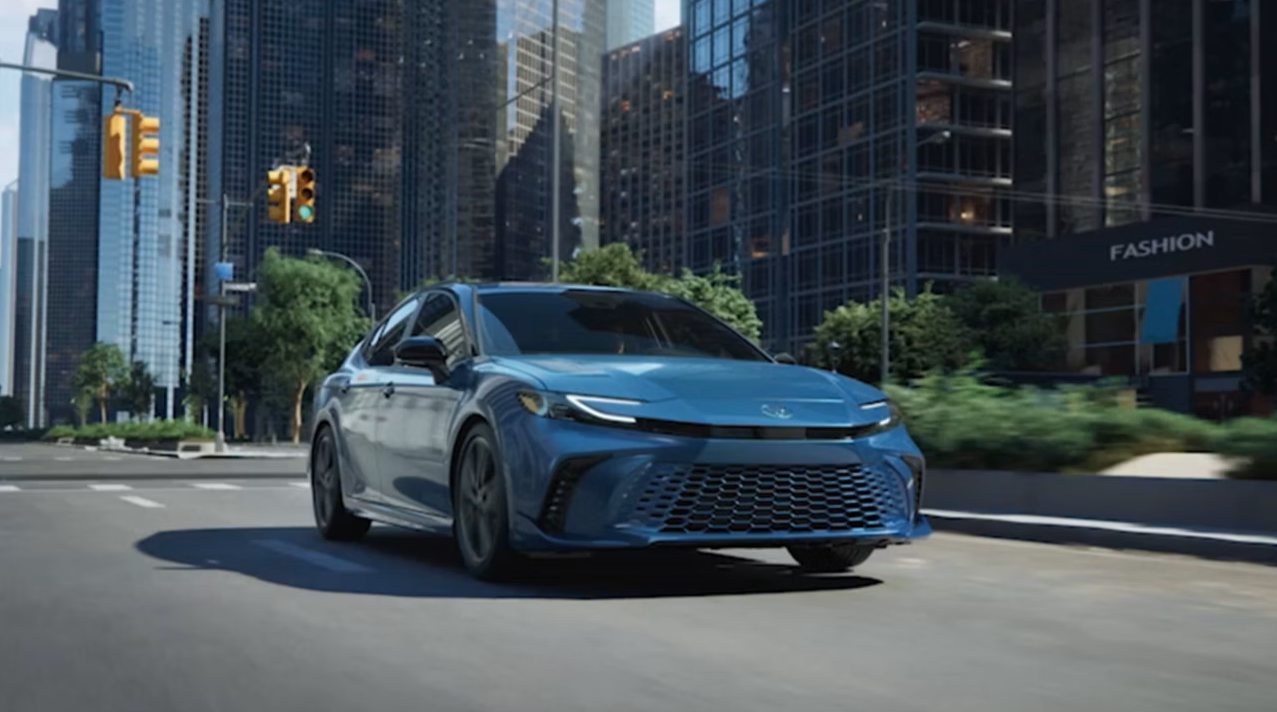
A great everyday vehicle needs to do more than look good in a driveway. It needs to handle the morning commute, make room for passengers, keep fuel costs manageable, and remain useful as the miles add up. That balance helps explain the Toyota Camry’s lasting appeal.
For decades, the Camry has been a familiar choice for drivers who want a comfortable midsize sedan with a reputation for dependability. Its appeal reaches across generations, from first-time buyers to families and experienced commuters.Today’s Camry builds on that identity with hybrid efficiency, modern driver assistance, and convenient technology. Looking at its history and the 2026 model’s features shows why it remains an important reference point for shoppers comparing practical sedans.
Market Position and Legacy: A Sedan Built Around Everyday Needs
The Camry’s place in the automotive market comes from consistency. While styling, powertrains, and technology have changed, its central purpose has remained recognizable: provide useful transportation that balances comfort, efficiency, and value.Toyota’s 2024 Camry announcement marked more than 40 years of the model in America and reported 21 consecutive years as the country’s best-selling midsize sedan. That record demonstrates sustained buyer interest across multiple generations. pressroom.toyota.com
Sales success alone does not establish reliability, but it helps explain the Camry’s role as a benchmark. A vehicle that attracts buyers for decades becomes a familiar point of comparison. Shoppers naturally ask how other sedans measure up in passenger comfort, fuel economy, equipment, and ownership costs.
The Camry also shows how a traditional sedan can adapt. Beginning with the 2025 model year, Toyota moved the U.S. Camry lineup exclusively to hybrid power. The change brought a new approach to efficiency while maintaining the vehicle’s focus on everyday usability. Toyota USA Newsroom
For buyers who prefer a sedan’s size and driving feel, that evolution gives the Camry continued relevance.
Toyota Camry Reliability and Long-Term Ownership
 Toyota Camry reliability is often a major reason shoppers consider the model. Its established reputation for dependability is part of its appeal, but long-term ownership deserves a closer look than a simple promise that a car will last.
A vehicle’s actual service life depends on maintenance, driving conditions, climate, and how previous owners treated it. A familiar nameplate cannot replace regular care or a careful inspection of a used vehicle.
The 2026 Camry combines a 2.5-liter four-cylinder engine with Toyota’s fifth-generation hybrid system. Front-wheel-drive models produce 225 net combined horsepower, while all-wheel-drive versions produce 232 net combined horsepower. pressroom.toyota.com
Those specifications describe its capability, rather than proving future reliability. The latest generation is still too new to have decades of ownership history behind it. Buyers should distinguish the Camry’s broader reputation from what can already be established about a specific model year.
For someone planning to keep a Camry for many years, the most useful approach is straightforward: follow the vehicle’s maintenance schedule, address warning lights promptly, and keep service records. When shopping used, review those records and arrange a professional inspection.
Hybrid Battery Coverage Adds Ownership Support
Hybrid battery coverage is another consideration for buyers thinking about longevity. Toyota provides a 10-year/150,000-mile limited warranty for its hybrid batteries, whichever comes first, subject to warranty terms. toyota.comThat coverage offers protection for a significant component of the vehicle. It is separate from a guarantee of total vehicle lifespan, and buyers should review the warranty details for their particular Camry.
The practical lesson is that reliability involves several pieces working together: engineering, maintenance, vehicle condition, and ownership support.
Practical Engineering That Fits Daily Driving
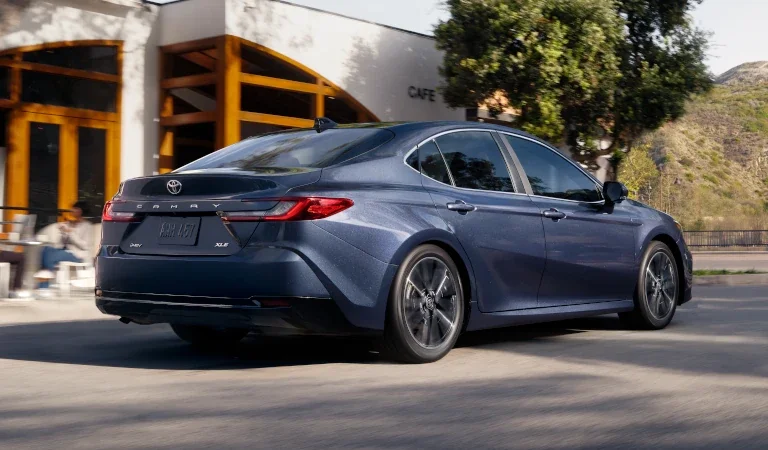 The Camry’s engineering is easiest to appreciate through ordinary tasks. Drivers need predictable acceleration when joining traffic, comfortable operation during a commute, and efficiency without adding extra steps to their routine.
Its hybrid system combines gasoline and electric power, while an electronically controlled continuously variable transmission, or eCVT, manages the powertrain’s operating ratio. Toyota describes this arrangement as supporting fuel efficiency and responsiveness. Toyota USA Newsroom
The Camry hybrid does not require external charging. Its system replenishes the hybrid battery through engine operation and regenerative braking, which recovers some energy as the vehicle slows. Drivers continue to refuel with gasoline.